Table of contents
- Pressure on the modern SOC
- From SIEM to SOAR: the foundation of automation
- The arrival of Artificial Intelligence in the SOC
- Autonomous agents and AI-driven orchestration
- The importance of human supervision
- Governance and accountability in automation
- Practical integration: SIEM + SOAR + AI Chatbot
- Real tools and market trends
- Benefits and risks of automation
- Toward the autonomous SOC 2030
In today’s digital ecosystem, organizations face a constant flow of increasingly sophisticated cyber threats. The Security Operation Center (SOC) has become the operational heart of corporate cyber security, but also one of the departments under the greatest pressure: too many alerts, too many tools, and too few skilled analysts.
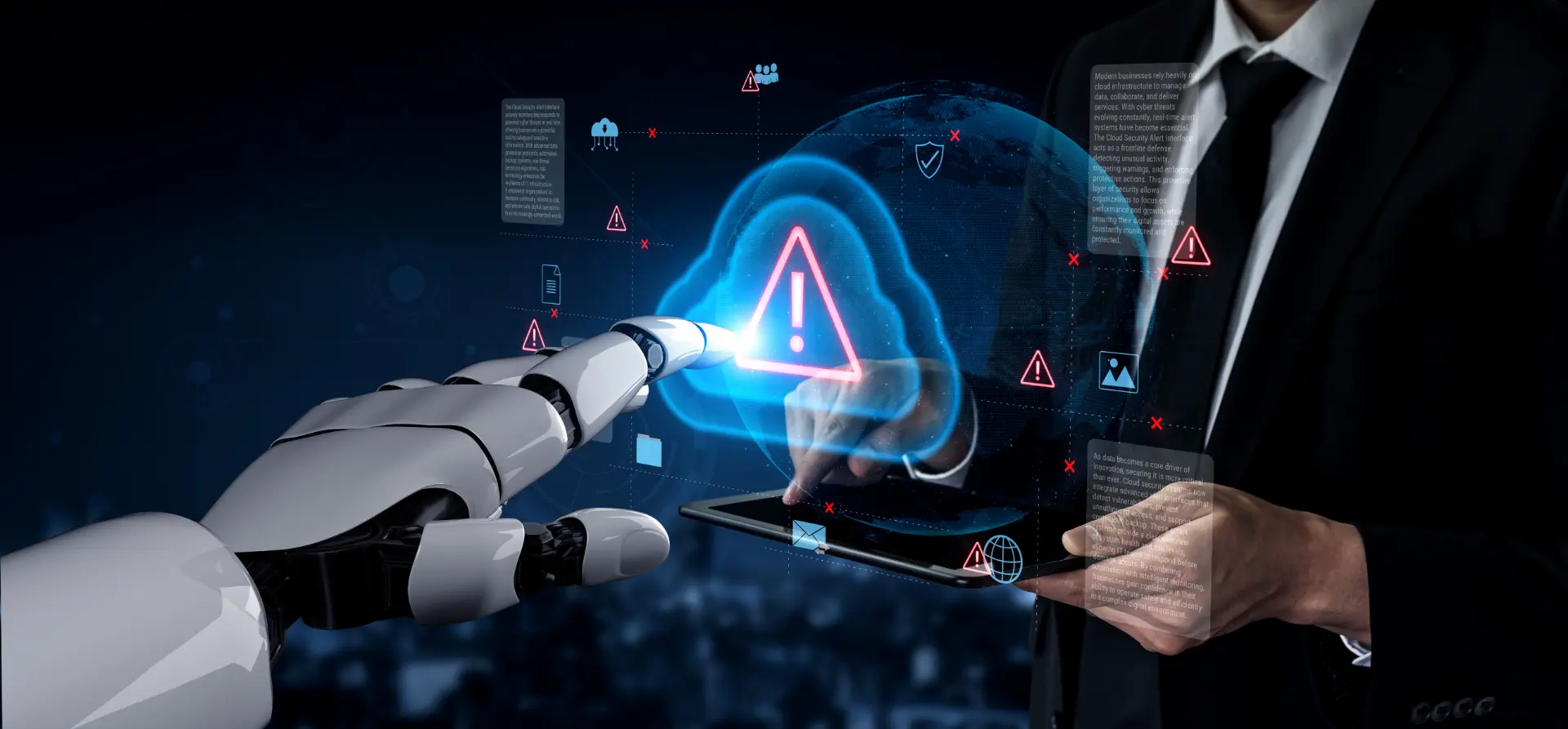
Incident response automation, powered by artificial intelligence and autonomous agents, is redefining this balance. From automated triage to AI-assisted decisions and intelligent playbooks, the SOC is evolving toward a scalable, predictive and adaptive model, capable of reacting in seconds to threats that once required hours or even days.
Pressure on the modern SOC
Widespread digitalization, a global cyber security talent shortage, and the growing volume of security alerts have turned the SOC into an extremely complex environment.
Each day, a single analyst may face hundreds or thousands of SIEM (Security Information and Event Management)alerts. Many are false positives, yet each must be verified, documented, and often manually addressed.
According to Gartner, over 70% of SOC teams report being unable to process all alerts in a timely manner.
The result? Response delays, analyst fatigue, and in the worst cases, undetected threats that escalate into serious breaches.
Automation is therefore not a luxury but a strategic necessity to reduce workload, increase precision, and standardize response procedures.
From SIEM to SOAR: the foundation of automation
The first step toward SOC automation came with the advent of SOAR (Security Orchestration, Automation and Response) platforms.
While the SIEM collects, correlates, and reports security events, SOAR systems enable automated response actions.
Example:
- The SIEM detects anomalous behavior (a suspicious login).
- The SOAR automatically triggers a playbook that:
- Isolates the affected endpoint.
- Notifies the team via Slack or Microsoft Teams.
- Launches an antivirus or EDR scan.
- Updates the ticket in the ITSM system.
This workflow, which once required hours, now completes in seconds.
Solutions like Splunk SOAR, Palo Alto Cortex XSOAR, and IBM QRadar SOAR offer extensive integration libraries and prebuilt playbooks, allowing automation across multiple platforms.
The arrival of Artificial Intelligence in the SOC
AI represents the next evolutionary step.
Machine learning algorithms and large language models (LLMs) go beyond predefined rules they learn from data, context, and behavior.
Here’s how artificial intelligence is transforming the SOC:
- Intelligent triage
AI agents analyze alerts, assess risk, and suggest priorities, reducing classification time by 60–70%. - ChatOps and virtual assistants
Integrated chatbots (powered by LLMs like GPT or Claude) let analysts query logs, generate reports, or build playbooks using natural language. - Predictive anomaly detection
ML models scan network or endpoint activity to detect unusual patterns before they turn into incidents. - Decision support
AI recommends containment or mitigation actions, simulates outcomes, and assists CISOs in selecting the optimal response.
Autonomous agents and AI-driven orchestration
The new frontier is not mere automation but controlled autonomy.
AI agents can interact with multiple enterprise systems, communicate with one another, and coordinate multi-layered responses.
Example
A “Responder” agent monitors SIEM alerts; when a critical anomaly appears, it contacts a “Network Defender” agent, which enforces a temporary firewall rule and notifies an “Analyst Agent” for human review.
Everything happens in a coordinated, documented, and traceable manner.
This AI-driven orchestration underpins emerging platforms like Microsoft Sentinel Copilot or Cortex XSIAM, where AI becomes an integral part of the SOC decision-making chain.
The importance of human supervision
Automation doesn’t remove the human factor it redefines it.
The concept of human-in-the-loop is central today.
It means AI agents can act quickly, but always under human supervision at critical points such as:
- triggering countermeasures that could affect service continuity;
- managing incidents with legal or reputational implications;
- final validation of automated actions in production environments.
The goal is not to replace analysts but to augment them freeing them from repetitive tasks and empowering them to focus on judgment, strategic analysis, and management communication.
Governance and accountability in automation
As AI enters the SOC, the rules of security governance evolve.
Who is responsible if an automated agent mistakenly isolates a critical server?
How can we ensure transparency in algorithmic decision-making?
Organizations must implement accountability policies, AI action traceability, and audit mechanisms. Standards such as ISO/IEC 42001 (AI Management System) and frameworks like NIST AI RMF (Risk Management Framework) already provide reference models to structure such responsibilities.
Practical integration: SIEM + SOAR + AI Chatbot
Here’s a simplified (executive-level but technical) example of integrating SIEM, SOAR, and an AI chatbot to support triage:
# Simplified example – Automated SOC integration (Python)

import requests

import json

# SOAR endpoint: isolation playbook

SOAR_URL = "https://soar.company.com/api/playbook/isolate_host"

TOKEN = "API_TOKEN"

# Alert received from SIEM

alert = {

    "id": "A2025-1103-001",

    "severity": "high",

    "source_ip": "10.1.2.45",

    "description": "Ransomware activity detected"

}

# Ask AI chatbot whether to proceed automatically

def ask_ai_decision(alert):

    question = f"Alert: {alert['description']} from {alert['source_ip']}. Proceed with isolation?"

    payload = {"message": question}

    response = requests.post("https://internal-chatops.ai/api/ask", json=payload)

    return response.json().get("decision", "review")

decision = ask_ai_decision(alert)

if decision == "isolate":

    headers = {"Authorization": f"Bearer {TOKEN}"}

    r = requests.post(SOAR_URL, headers=headers, json=alert)

    print("Host automatically isolated.")

else:

    print("Escalation requested to SOC team.")
This script illustrates how an internal AI agent can serve as a decision filter before triggering a SOAR playbook.
The human-in-the-loop element may appear as a ChatOps approval step (“Approve host isolation?”) via Teams or Slack.
Real tools and market trends
Several leading platforms are steering the industry toward intelligent SOCs:
- Microsoft Sentinel + Security Copilot
Native generative AI integration with automated playbooks; up to 65% reduction in mean time to respond (MTTR). - Splunk SOAR
Python-based automation with over 300 integrations and a visual workflow editor. - Cortex XSOAR and XSIAM (Palo Alto Networks)
Combine automation, behavioral analytics, and multi-source data orchestration. - IBM QRadar SOAR
Focuses on governance, collaboration, and compliance with NIST and ISO frameworks.
Mature organizations are building truly hybrid SOCs, where AI drives speed and humans provide direction.
Benefits and risks of automation
Key benefits:
- Response speed (MTTR reduced by up to 80%)
- SOC scalability even with smaller teams
- Consistency and repeatability of actions
- Improved cost and resource efficiency
Risks and limitations:
- Algorithmic dependence
A logic error can scale rapidly. - Data bias: automated decisions based on incomplete or skewed datasets.
- Loss of human expertise if analysts become mere overseers.
- Compliance and auditability
Difficulty proving why AI acted in a given way.
Balancing automation and control therefore remains a critical challenge.
Toward the autonomous SOC 2030
Looking ahead, the vision of an Autonomous SOC 2030 is emerging — a system where AI, automation, and predictive analytics work in synergy to anticipate threats and prevent incidents.
In this model:
- AI agents learn in real time from global incidents.
- Predictive models identify emerging attack patterns.
- Response decisions are simulated and optimized before execution.
- Humans focus on strategy, risk management, and communication.
The SOC of the future will be autonomous but not blind guided by algorithms, yet grounded in human ethics and accountability.
An ecosystem where AI becomes not just a tool but an operational partner, capable of learning, adapting, and above all, collaborating.
Questions and answers
- What is incident response automation?
It’s the use of systems and algorithms to execute containment or mitigation actions without direct human intervention. - What’s the difference between SIEM and SOAR?
The SIEM collects and analyzes security logs; the SOAR automates responses and orchestrates actions. - Can AI replace SOC analysts?
No. AI enhances efficiency, but human oversight and judgment remain essential. - What does “human-in-the-loop” mean?
A model in which humans retain decision control at critical points of automation. - What are the main SOAR tools on the market?
Splunk SOAR, Cortex XSOAR, Microsoft Sentinel, and IBM QRadar SOAR. - What benefits does automation bring?
Speed, error reduction, scalability, and operational consistency. - What risks does it involve?
Systemic errors, algorithmic bias, loss of transparency, and governance challenges. - How can an AI chatbot be integrated into the SOC?
Via REST APIs linking alert systems and automated playbooks. - What governance standards are recommended?
ISO/IEC 42001 and NIST AI RMF for risk management and AI traceability. - Will the SOC of the future be fully autonomous?
It will automate operations, but humans will supervise to ensure control, ethics, and responsibility.