Table of contents
- The intersection of energy and cyber security
- Emerging risks in energy infrastructures
- Energy-aware security architecture
- Practical example: correlating energy anomalies and security events
- Case study: integrating cyber security and sustainability in SCADA
- Green attacks: when saving power compromises security
- Artificial intelligence and critical consumption
- The evolving role of the CISO
In the 21st century, cyber security is no longer just about data protection or defending against malware and intrusions. It has become an essential pillar of energy sustainability and environmental resilience. Every digital process, every data center, every artificial intelligence (AI) cluster consumes energy, produces heat, and directly affects the electrical grid. At the same time, every watt consumed represents a potential point of vulnerability.
The relationship between energy and cyber security has grown inseparable. While companies strive to reduce their environmental impact through green IT initiatives and energy-efficient infrastructure, attackers are discovering new targets within those very systems: energy control networks, IoT devices managing consumption, SCADA systems, and optimization algorithms used to balance electric loads.
In this new context, the CISO of the future will need to understand not only encryption and firewalls, but also power efficiency, redundant architectures, and digital carbon footprint metrics.
The intersection of energy and cyber security
Over the past decade, technological evolution has led to an exponential rise in IT power consumption. Data centers, the digital lungs of the modern economy, now consume more than 3% of the world’s total electricity — more than many industrialized nations. Within these ecosystems, cyber security plays a dual role: ensuring operational continuity and protecting the very energy infrastructure that powers them.
Generative AI, deep learning, and neural networks require GPU clusters with enormous energy demands. A single training session for a large language model (LLM) can consume hundreds of megawatt-hours, with a tangible environmental and financial cost.
However, optimizing energy consumption often involves reducing redundancy or disabling monitoring systems both vital security layers. This creates a structural paradox: the more you save energy, the less secure your systems may become.
Example
A data center that slows down cooling fans to save electricity could raise internal temperature levels, reducing the sensitivity of thermal sensors. In a targeted attack, a hacker could manipulate these controls to induce silent overheating, damaging hardware and triggering service outages.
Emerging risks in energy infrastructures
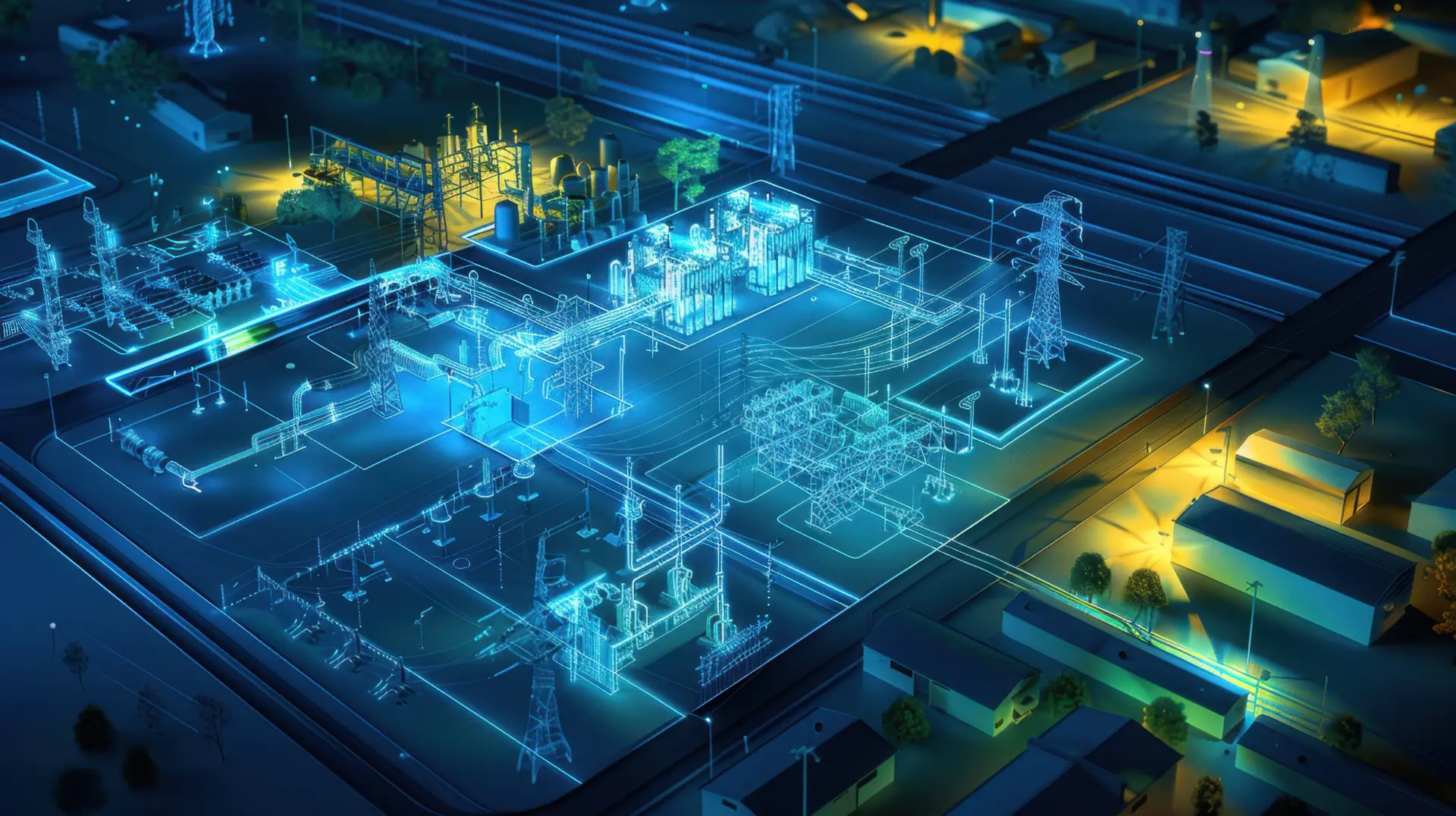
The energy attack surface has become one of the most critical fronts. Attacks against electric grids and SCADA systems have steadily increased. Reports from Palo Alto Networks Unit 42 and Dragos indicate that in 2024 alone, more than 180 significant incidents targeted energy operators and distribution systems.
These attacks don’t merely seek disruption they manipulate consumption data and efficiency metrics, creating both operational and market instability.
The most common attack vectors include:
- Manipulating PLC controllers within SCADA systems to alter voltage or frequency;
- Ransomware targeting control centers to disable monitoring or remote supervision;
- Falsifying consumption data to exploit optimization algorithms or energy-trading mechanisms;
- “Green attacks” that exploit energy-saving policies to lower security monitoring (e.g., shutting down IDS at night to save power).
A notable case was the Ukrainian power plant hit by Industroyer2, a malware that manipulated IEC 104 parameters to cause targeted blackouts, exploiting weaknesses in OT communications.
Energy-aware security architecture
Organizations must now rethink their security architecture by integrating energy awareness into their design. The guiding principle is “cyber-sustainability by design” a model that treats energy efficiency as a security parameter.
A modern architecture should:
- Balance redundancy and consumption
Use distributed clusters with logical redundancy but intelligent thermal/load balancing; - Implement adaptive encryption
Dynamically select cryptographic strength based on data sensitivity and context (e.g., AES-256 for sensitive data, ChaCha20 for real-time flows); - Correlate energy and security metrics
Integrate consumption, temperature, and SIEM logs into a unified dashboard; - Leverage containers and microservices to minimize computational overhead;
- Adopt AI-driven energy prediction models hardened against data poisoning and adversarial manipulation.
Example
A sustainable DevSecOps pipeline could include energy metrics for automated security testing (SAST/DAST) and schedule those jobs during off-peak energy periods or on clusters powered by renewables.
Practical example: correlating energy anomalies and security events
A concrete application of this integration is joint monitoring of energy consumption and cyber security events.
The following simplified Python script demonstrates how to correlate energy logs with network alerts to identify abnormal behavior:
import pandas as pd

import matplotlib.pyplot as plt

# Load energy logs (kWh consumed per hour)

energy = pd.read_csv('energy_log.csv', parse_dates=['timestamp'])

# Load security logs (IDS alerts, anomalies, etc.)

security = pd.read_csv('security_log.csv', parse_dates=['timestamp'])

# Normalize data hourly

energy_hourly = energy.groupby(energy['timestamp'].dt.hour)['kwh'].mean()

security_hourly = security.groupby(security['timestamp'].dt.hour)['alerts'].sum()

# Statistical correlation

correlation = energy_hourly.corr(security_hourly)

print(f"Energy-Security correlation: {correlation:.2f}")

# Visualize results

plt.figure(figsize=(10,5))

plt.plot(energy_hourly, label="Energy consumption (kWh)")

plt.plot(security_hourly, label="Security events")

plt.legend()

plt.title("Correlation: Energy vs Security")

plt.show()
When integrated into a SIEM (Security Information and Event Management) or OT monitoring system, such correlations can reveal suspicious patterns for instance, unexplained power spikes coinciding with login attempts or exploitation attempts.
Case study: integrating cyber security and sustainability in SCADA
A European energy management company specializing in wind turbines implemented a cyber-sustainability strategy within its SCADA systems.
The dual challenge: rising energy costs in its data center and an increasing number of remote PLC intrusion attempts.
The company designed a three-tier integrated architecture:
- Physical layer
Energy and thermal sensors on control nodes and SCADA servers; - Logical layer
A correlation engine combining energy logs with SIEM logs (Elastic + Wazuh); - Decision layer
A machine learning model predicting deviations in energy use caused by abnormal network activity.
The results were tangible: a 12% reduction in IT power consumption and a 35% improvement in intrusion detection accuracy, with false positives below 5%.
The company’s CISO introduced a new board metric: the Energy Security Index (ESI) measuring the ratio between energy savings and acceptable cyber risk.
Green attacks: when saving power compromises security
A growing phenomenon is the “green attack” operations that exploit energy-saving practices to create vulnerabilities.
Example
Many organizations deactivate monitoring systems or backups overnight to reduce power usage. Attackers, aware of these patterns, time their intrusions accordingly. Likewise, suspending virtual machines or containers for energy reasons can leave outdated, unpatched services dormant and exploitable.
Every watt saved without proper control can become an open door.
The concept of secure energy saving thus requires intelligent shutdown and reactivation policies, coupled with audit trails and automated alerts.
Dynamic micro-segmentation and Zero Trust Network Access (ZTNA) frameworks can significantly reduce the attack surface without compromising energy efficiency.
Artificial intelligence and critical consumption
Artificial Intelligence represents the greatest challenge to sustainable IT. Training complex models consumes vast amounts of energy and increases reliance on hyperscale data centers. Yet AI itself can be a tool for balancing energy and security objectives.
Machine learning models can:
- Predict energy spikes associated with network loads or backups;
- Correlate consumption data with suspicious activity;
- Optimize workload distribution across energy-efficient clusters;
- Detect unauthorized mining or cryptojacking through abnormal power usage.
A self-adaptive cyber security-energy model must balance three critical parameters: risk, cost, and consumption. This is the foundation of a new discipline AI-driven Energy Security.
The evolving role of the CISO
The Chief Information Security Officer of the future must evolve into a hybrid CISO, able to collaborate with energy engineers, sustainability officers, and ESG managers.
Core competencies will go beyond the classic CIA triad (Confidentiality, Integrity, Availability), introducing a fourth dimension: Sustainability.
Key skills include:
- Understanding of energy models and SCADA/ICS environments;
- Assessment of IT carbon footprint and cloud-related environmental risks;
- Design of incident response plans considering power constraints and sustainability;
- Implementation of cyber-sustainability metrics, such as kWh per managed alert or CO₂ per processed log.
The green-aware CISO becomes the guardian not only of digital resilience but of the organization’s environmental responsibility and efficiency.
Conclusions
Energy and consumption cyber security will define digital maturity in the coming decade.
In a world where sustainability is strategic, IT protection cannot ignore the energy impact of its own systems.
Designing secure and sustainable infrastructures means building a digital ecosystem that is resilient, efficient, and intelligent.
The challenge is clear: save watts without losing security.
Those who can achieve that balance will lead the next generation of responsible innovation.
Questions and answers
- What is energy cyber security?
It’s the integration of cyber security and energy management to protect systems from threats tied to consumption and distribution. - Why are data centers critical targets?
They consume huge amounts of energy and store sensitive data making them prime targets for disruption and extortion. - What are “green attacks”?
Cyber operations exploiting energy-saving policies, such as system shutdowns, to reduce security defenses. - How can efficiency and security coexist?
Through cyber-sustainable architectures that balance adaptive encryption, intelligent redundancy, and power-aware monitoring. - How does AI affect energy cyber security?
AI both increases energy consumption and helps predict anomalies, optimize workloads, and detect attacks. - What is Secure Energy Saving?
A practice of saving energy safely via controlled shutdowns, auditing, and automated risk-based reactivation. - How can cyber security sustainability be measured?
Through metrics like the Energy Security Index or the carbon footprint of defensive systems. - Which sectors are most exposed?
Energy, manufacturing, cloud providers, and healthcare where OT and IT networks converge. - How can SCADA systems be protected from energy-related attacks?
By isolating networks, updating firmware, segmenting controllers, and monitoring physical parameters in real time. - What is the future role of the CISO?
To become a holistic leader combining governance, sustainability, and digital resilience in one strategic vision.