Table of contents
- Peer to peer: meaning
- Peer to peer network: how it works
- Peer to peer and file sharing
- Peer to peer vs client server network
- Advantages of peer to peer
- Disadvantages of peer to peer
Peer to peer: meaning
When we talk about peer to peer, often abbreviated as peer to peer P2P, we refer to a computing communication model that has revolutionized the way data exchange happens on the Internet.
The term peer to peer can be literally translated as “from equal to equal,” indicating a structure where every node in the network can simultaneously act as both client and server.
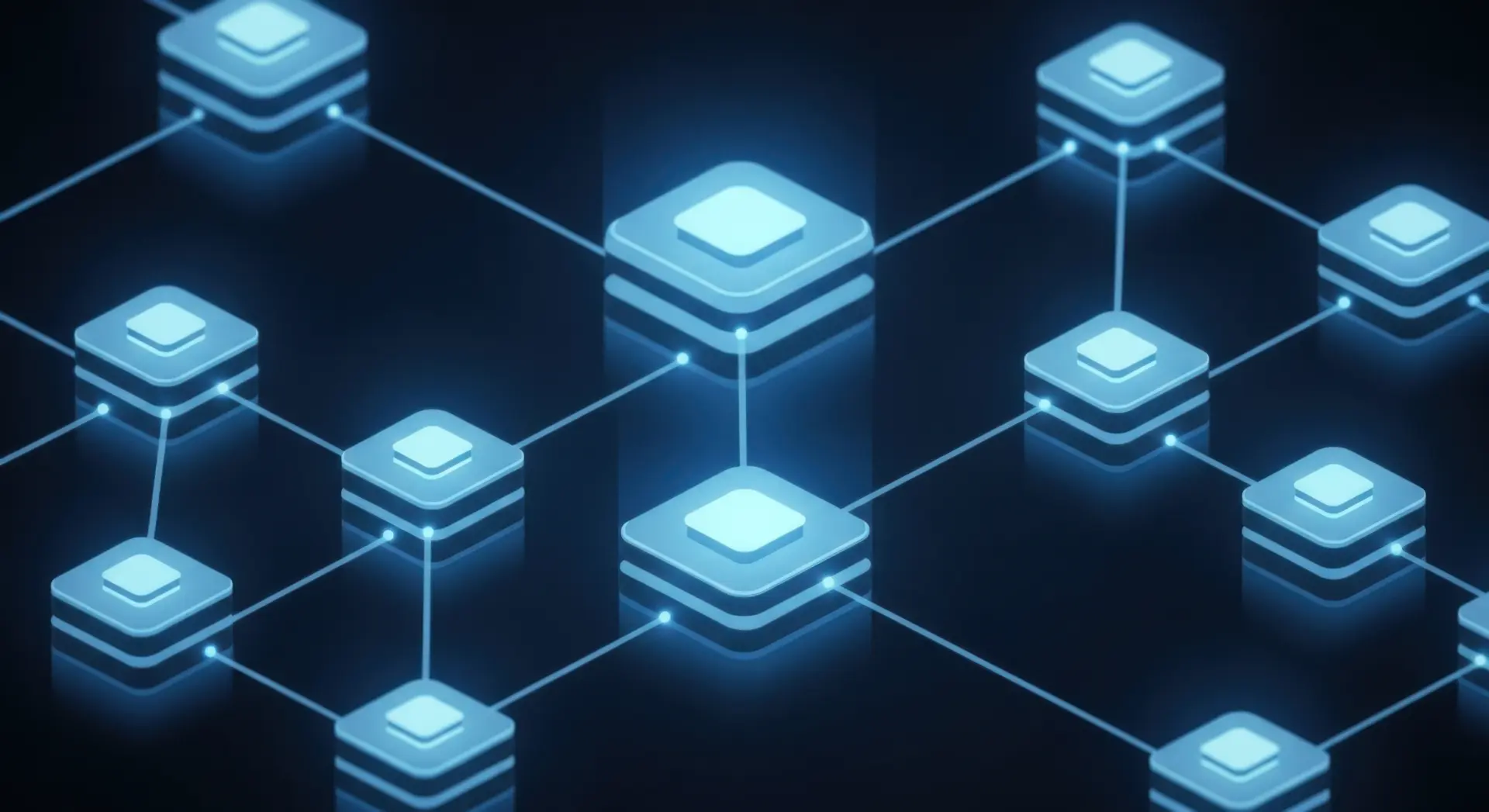
Unlike the traditional client server model, where a central server coordinates connections, in a peer to peer networkthere is no single point of control. Here, every computer connected actively participates and makes its resources available such as storage space or computing power without the need for a dedicated server.
This approach became widespread especially with file sharing, making it possible to exchange data directly between users all over the world.
But peer P2P is not limited to that: it is also a paradigm applied to distributed cloud systems, cryptocurrencies, and even decentralized streaming platforms.
Peer to peer network: how it works
A peer to peer network is made up of interconnected devices that cooperate with each other. Unlike the client server network, in which a central server manages all requests, in a P2P network every node is independent and at the same time collaborative.
In practice, P2P allows every device to be both a requester and a provider of resources at the same time.
Example
Imagine three friends who want to exchange large documents. In a client-server system, they would need to upload the files to a dedicated server and then download them from there.
In a peer to peer network, instead, each of them shares the file directly from their own computer, and the others can download it without intermediaries. This means reduced costs, less dependence on central infrastructures, and faster connections.
Peer to peer and file sharing
The most well-known field where peer to peer P2P became successful is file sharing. Historic programs such as Napster, and later eMule or BitTorrent, popularized the concept of P2P networks, allowing millions of users to exchange music, movies, or software.
In this model, a file is not stored on a single server but split into many parts distributed among the various nodes. When a user wants to download a file, the system collects pieces from multiple computers simultaneously, reconstructing the content on the final device. This ensures speed, redundancy, and resilience: even if one node disconnects, the other copies available on different nodes still guarantee the completion of the download.
Peer to peer vs client server network
To fully understand the peer to peer meaning, it is useful to compare it with the client server model.
- In a client server network, a central server handles all requests and distributes resources. This approach simplifies control and security but also introduces weak points: if the server goes down, the whole network stops working.
- In a peer to peer network, instead, every computer becomes a node in the system, capable of both providing and receiving resources. There is no single dedicated server to protect or maintain. This makes the structure more scalable and less vulnerable to single failures, but it also poses challenges in terms of management and security.
Advantages of peer to peer
The advantages of P2P networks are numerous. First, P2P allows eliminating the management costs linked to central servers. Moreover, the distributed nature of the network ensures greater resilience: if one node disconnects, the others continue to function.
From a scalability point of view, the more users connect, the more resources become available. This means the system grows proportionally to its diffusion.
Example
BitTorrent: the more people download the same file, the faster the distribution becomes.
Another important advantage concerns freedom: since there is no central server, it is much harder for an authority to completely block a peer to peer network. This makes the technology widely used in countries with heavy censorship.
Disadvantages of peer to peer
However, there are also disadvantages. One of the main issues is security. In a peer to peer network, every node communicates directly with other devices, increasing the risk of downloading infected content or suffering intrusions.
Another problem is the lack of control: without a central server, it becomes more difficult to guarantee service quality or rule enforcement. Moreover, in legal contexts, file sharing of copyrighted material has made the P2P model the subject of controversies and restrictions.
Finally, performance can vary. Even though the system gets stronger as more users join, when there are few active nodes the transfer speed may be very low.
Beyond file sharing: modern uses of P2P
Today, peer P2P goes far beyond file sharing. Its distributed logic is the basis of innovations such as cryptocurrencies and blockchain. In this context, the peer to peer network is essential: every node takes part in the process of validating transactions, ensuring a secure system without central authorities.
Even in the world of streaming and cloud, there are P2P applications. Some services use this principle to distribute video content in real time, leveraging users’ resources. Other projects aim to create P2P networks for decentralized storage, capable of competing with traditional cloud services based on dedicated servers.