
Table of contents
- What data centers are
- How data centers work
- The core components of a data center
- Types of data centers
- Modern data centers and artificial intelligence
- Operational continuity and redundancy capacity
- Security and data protection
- Why data centers are essential
- How to choose the right model
Have you ever wondered where your data actually goes when you upload it online?
Have you ever questioned how secure your company’s or your website’s information really is?
Or have you wondered why, even when everything seems to be working, a single failure can bring entire digital services to a halt?
If at least one of these questions sounds familiar, you’re in the right place.
In the digital world we live in, data is at the center of everything: websites, applications, e-commerce, financial services, business systems. But behind every piece of data there is a physical and logical infrastructure that is often invisible: data centers.
Understanding what data centers are, how they work and what their key elements are is not just a technical curiosity. It is a fundamental step toward making informed decisions about security, performance and digital growth.
In this article, we will clearly and practically explain what data centers are, what the main models are, how they ensure operational continuity and why they represent a strategic asset for any business.
What data centers are
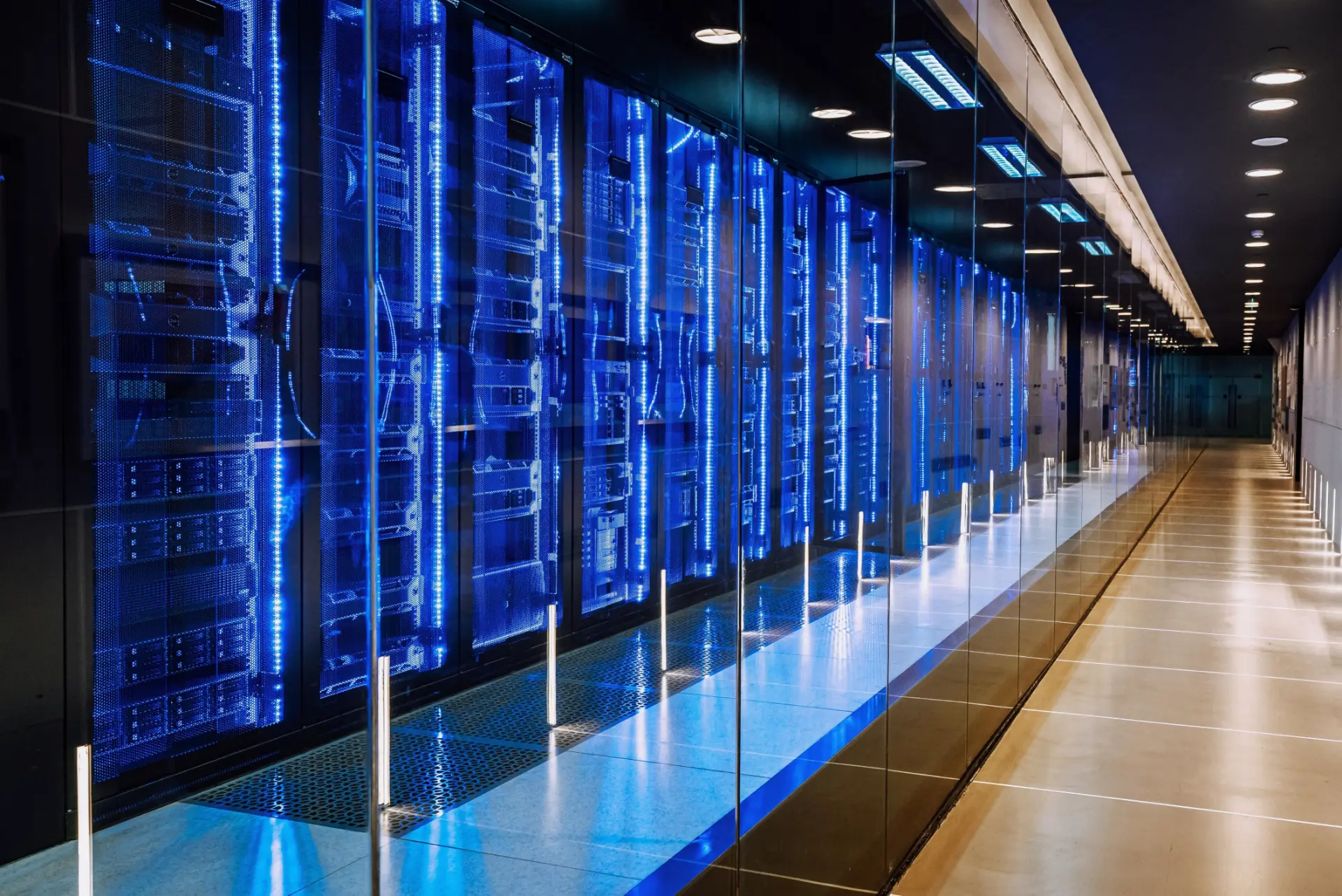
When talking about what data centers are, we refer to highly specialized physical facilities designed to host servers, storage systems and network infrastructures.
In simple terms, a data center is the place where digital data lives and is managed.
But this definition is only the surface.
A modern data center is a complex ecosystem that integrates hardware, software and security systems to ensure that data is always available, protected and accessible. It is not just about servers being powered on: these are environments designed to operate 24 hours a day, 7 days a week, without interruptions.
When you ask what a data center is, the most concrete answer is this: it is the invisible engine that allows the internet and digital systems to exist and function.
- But to truly understand what data centers are, you need to go beyond the technical definition and observe their role in real life. Every time you send an email, access a business management system, use an app or save a file in the cloud, you are indirectly interacting with one or more data centers. This means that data centers are not an accessory element, but a critical infrastructure on which the entire digital economy is built.
- Another key aspect is that a data center can be designed with different levels of complexity and scalability. There are small environments dedicated to a single company, such as a corporate data center, and massive structures like hyperscale data centers, which manage millions of users simultaneously. In both cases, the goal remains the same: ensure operational continuity, high performance and data protection.
- In modern data centers, design is not only about computing power, but also about efficiency. Energy optimization, intelligent cooling and the use of advanced technologies help improve resource utilization and reduce waste. This is particularly important in a context where energy consumption is one of the main challenges in the industry.
- Finally, it is important to understand that data centers are the foundation of increasingly widespread models such as cloud computing and as-a-service solutions. This means that companies no longer need to own physical infrastructures, but can access IT resources on demand by leveraging globally distributed data centers.
In other words, truly understanding what data centers are means understanding how today’s digital world works: an interconnected, distributed system designed to be always available, scalable and secure.
How data centers work
To truly understand what data centers are, it is essential to understand how they work.
A data center is made up of several operational layers working together:
- Servers that process data
- Storage systems that store it
- Networks that enable information exchange
- Cooling systems to prevent overheating
- Power systems to ensure continuity
Example
When you access a website, your request is sent to a server hosted in a data center. The server processes the request and returns the content in a few milliseconds.
This process may seem simple, but it requires an extremely sophisticated infrastructure.
The core components of a data center
To truly understand what data centers are, you need to look closely at their components.
IT infrastructure
It includes servers, storage and networking devices. These elements represent the operational core of the data center.
But it’s not just about hardware quantity. In modern data centers, the IT infrastructure is designed to be highly scalable and virtualized. This means that a single physical server can host multiple virtual environments, optimizing resource utilization and reducing operational costs.
Technologies such as virtualization and containers allow workloads to be distributed dynamically, improving performance and ensuring greater flexibility. In cloud computing environments, this infrastructure is often distributed across multiple geographic locations, increasing resilience and availability.
Power supply and UPS systems
One of the most critical aspects is energy. Uninterruptible Power Supplies (UPS) ensure that systems continue to operate even during power outages. In many cases, backup generators are also present.
But energy management goes far beyond simple continuity. Data centers are designed to handle extremely high and constant loads, with redundant power distribution systems that eliminate single points of failure. Multiple independent power lines ensure systems remain active even in critical scenarios.
Example
In hyperscale data centers, energy is one of the most strategic factors, so much so that they are often built near dedicated or renewable energy sources to ensure long-term sustainability and continuity.
Cooling
Servers generate heat. Without proper cooling systems, the infrastructure would quickly be damaged. Modern data centers use advanced technologies to optimize energy consumption and improve resource utilization.
Today, hot and cold aisle containment systems, liquid cooling and free cooling technologies that leverage outside air are widely used. The goal is not only to maintain a stable temperature, but to do so as efficiently as possible. This is crucial because cooling is one of the main sources of energy consumption. Intelligent solutions, often supported by artificial intelligence, allow dynamic adjustment of cooling based on server load.
Physical security
Physical security is essential. Controlled access, video surveillance and anti-intrusion systems protect infrastructures from external threats.
In advanced data centers, security is multilayered: electronic badges, biometric authentication, perimeter controls and 24/7 security personnel. Access is granted only to authorized personnel and is constantly monitored. This is particularly important for ensuring data protection, especially when handling sensitive or critical information. Physical security also integrates with logical security, creating a complete defense system.
Redundancy
Data centers are designed with redundant components to prevent interruptions. This means that every critical element can be automatically replaced in case of failure.
Redundancy applies to power, networking, storage and even entire infrastructures. In many cases, data is replicated in real time across multiple systems or data centers, ensuring redundant capacity that allows operations to continue even in the event of major failures. This approach is the foundation of as-a-service models and cloud services, where the end user does not experience disruptions thanks to systems designed for continuous availability.
In conclusion, every component of a data center contributes to a single objective: ensuring continuity, security and performance. It is precisely this integration of technology, design and strategy that transforms a set of servers into a truly critical infrastructure for the digital world.
Types of data centers
When analyzing the types of data centers, several categories emerge, each with specific characteristics.
On-premise data center
An on-premise data center is managed directly by the company. It offers maximum control but requires significant investment and technical expertise.
Cloud data center
Cloud data centers allow access to IT resources via the internet. This model is the foundation of cloud computing and enables rapid scaling of resources on demand.
Corporate data center
A corporate data center is designed to support an organization’s internal operations. It can be physical or virtual.
Hyperscale data center
Hyperscale data centers are massive infrastructures used by large providers. They are designed to handle huge volumes of data and traffic.
Data centers and cloud computing
The connection between data centers and cloud computing is stronger than ever.
Modern digital services are based on as-a-service models, where IT resources are not purchased but accessed through subscriptions.
This means that:
- companies can scale quickly
- costs become more predictable
- infrastructure is managed by specialized providers
Cloud services therefore represent a natural evolution of traditional data centers.
Modern data centers and artificial intelligence
Modern data centers are rapidly evolving thanks to artificial intelligence.
AI is used to:
- optimize energy consumption
- predict failures
- improve operational efficiency
- dynamically manage resources
This approach improves resource utilization and reduces operating costs.
Operational continuity and redundancy capacity
One of the most critical aspects is service continuity.
Data centers are designed to ensure high uptime. Organizations such as the Uptime Institute define standards to classify infrastructure reliability.
Redundant capacity is what allows systems to continue operating even in the event of failures.
Security and data protection
Data protection is one of the fundamental pillars.
Data centers implement:
- encryption systems
- advanced firewalls
- network segmentation
- backup and disaster recovery
Security is not only technological, but also organizational.
Why data centers are essential
Understanding what data centers are also means understanding their strategic value.
Without data centers:
- the internet would not exist
- digital services would not function
- businesses could not operate
They are the foundation on which the entire digital ecosystem is built.
How to choose the right model
The choice between different solutions depends on several factors:
- budget
- internal skills
- scalability needs
- security requirements
An infrastructure can be built internally or entrusted to external providers.
Conclusion
Today more than ever, understanding what data centers are is not just a technical topic for a few experts, but a strategic skill.
Whether you manage a website, an e-commerce platform or a corporate infrastructure, data centers are the heart of your digital business.
The real difference lies not only in technology, but in the ability to choose the right solution for your goals.
Questions and responses
- What are data centers in simple terms?
They are facilities that host servers and systems to manage data and digital services. - What is the difference between a data center and the cloud?
The cloud uses data centers but provides remote access to resources. - Are data centers secure?
Yes, thanks to advanced physical and cyber security systems. - What is redundancy in a data center?
It is the presence of duplicate systems to prevent interruptions. - Does a company need its own data center?
Not necessarily, it can use cloud services.